

Rio Marie, Brazil October 31 – November 4, 2025
Floodwater, Giant Peacock Bass, and the Hard Reset After a Record Season
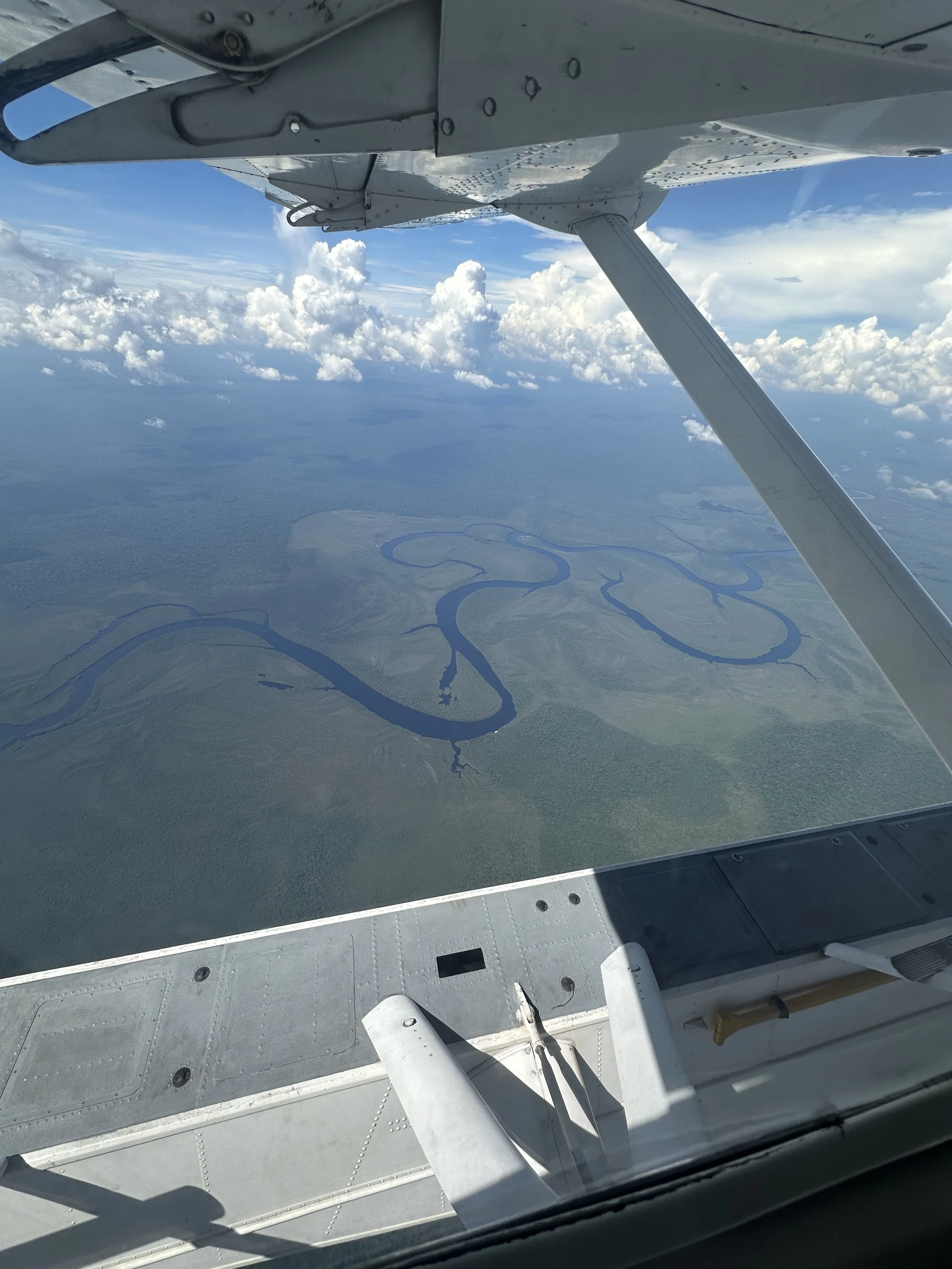
Remote takes a different definition in the Amazon
I finished my 151st guide trip of the season two days before getting on the plane. From late February through late October my life had been measured in early boat ramps, long drives, and the steady rhythm of rowing into rising trout. One hundred and thirty-six of those trips were requested, nearly ninety percent with returning anglers, the kind of season every guide hopes for and the kind that leaves you too tired to do much more than wash gear and fall asleep. I had planned to spend the fall catching up on writing — trip reports, fishing reports, the technical pieces I started in 2024 — but when the season finally ended, I didn’t slow down. Instead I packed a rod tube, met Jackson Jenkins, his dad John, and our buddy Peter at the airport, and pointed myself toward the Amazon. I didn’t need rest so much as I needed a reset.
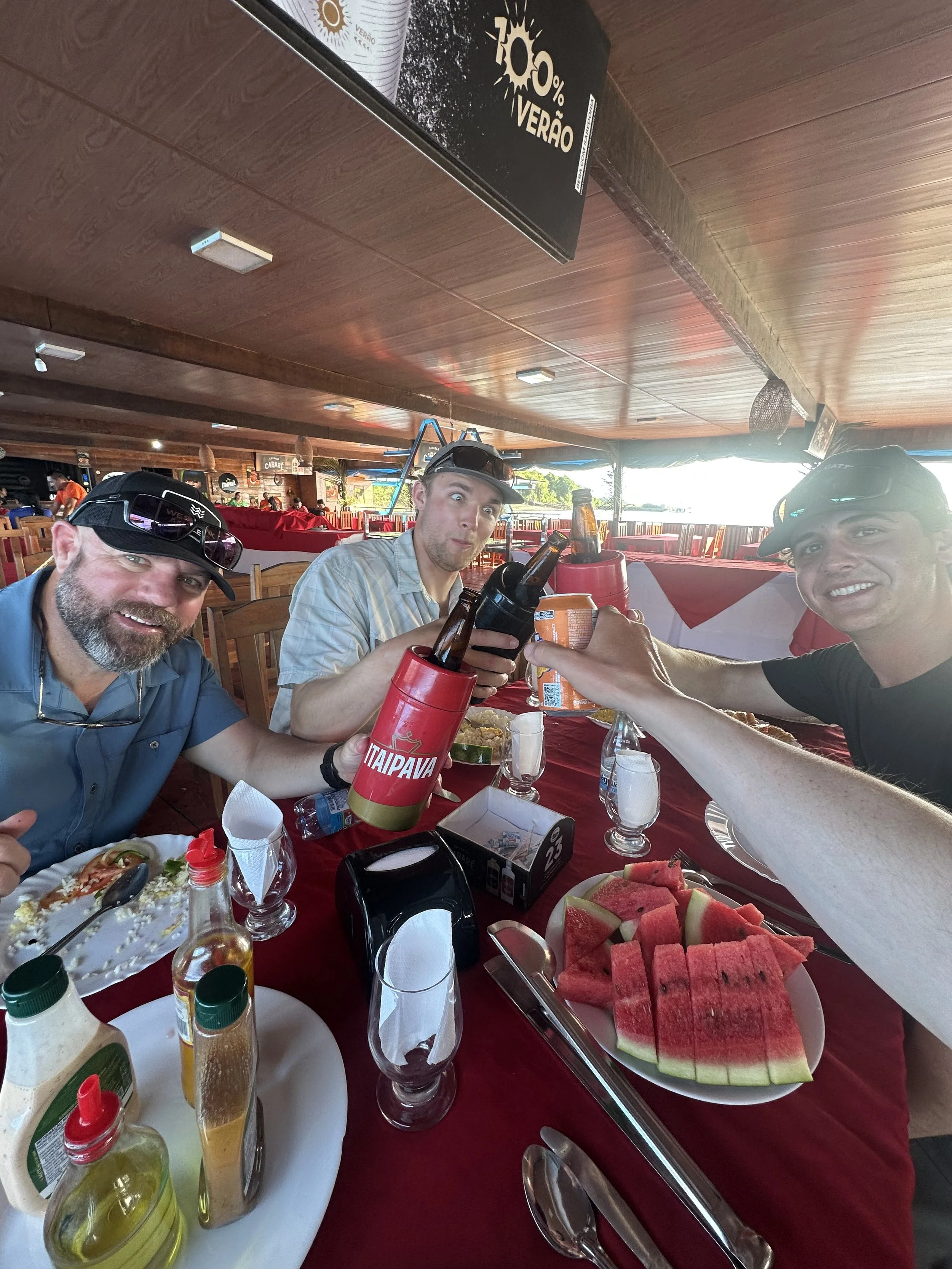
Floating Restaurant on the Rio Negro, Brazil
Travel days for fishing trips always carry the same strange mix of exhaustion and electricity. We left Jackson Hole on October 24, John joining us in Dallas for the overnight push to São Paulo. By mid-morning we were in Brazil, stepping into air so dense it felt like walking into warm water. Manaus hits you all at once — heat, movement, noise — and even though none of us had slept much, there was no chance we were going to sit in a hotel. Within hours we were moving through the city with a guide, standing in the middle of the fish market surrounded by a smell so overwhelming I couldn’t eat fish the rest of the trip, feeding arapaima that looked more like relics than living animals, eating lunch on a floating restaurant while cargo boats slid past in the current, and watching pink river dolphins surface beside swimmers along the bank. It was disorienting and perfect, the kind of cultural collision that reminds you how far from home you really are
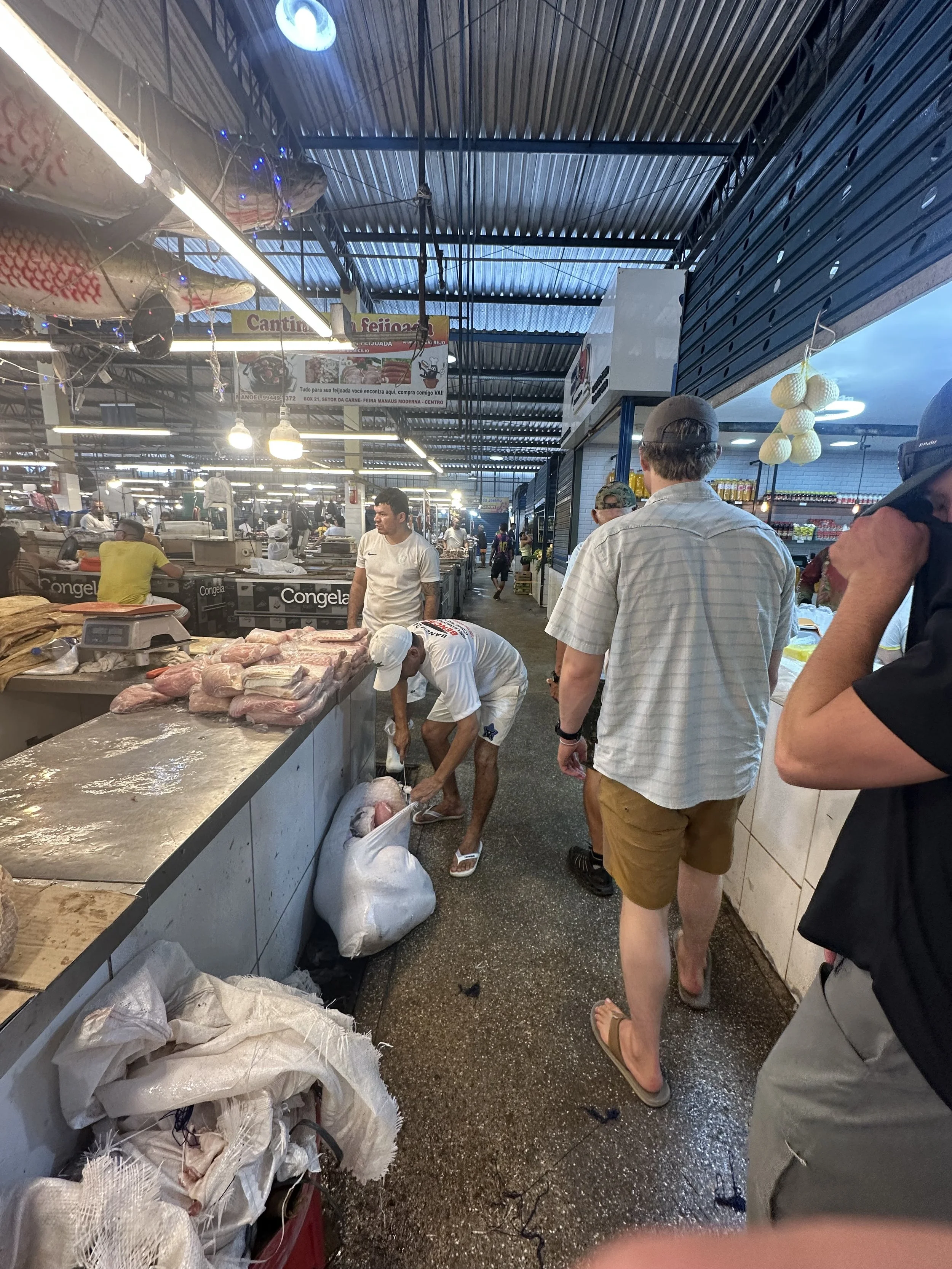
Manaus Fish Market
The float plane left at first light the next morning. That flight alone would have justified the journey. For four hours we flew over uninterrupted jungle — no roads, no smoke, no clearings — just an endless green canopy split by blackwater rivers that twisted toward a horizon you could never quite reach. It recalibrates your sense of scale in a way that’s hard to explain. When we dropped onto the river and idled toward the mothership, the outgoing group was waiting for us with tired smiles and the kind of loose posture that comes from a successful week of fishing. Every angler, they told us, had landed a peacock bass over eighteen pounds. Then, almost as an afterthought, they mentioned that the river had risen fifteen feet overnight after a massive upstream rain. That’s the Amazon — promise and warning in the same sentence
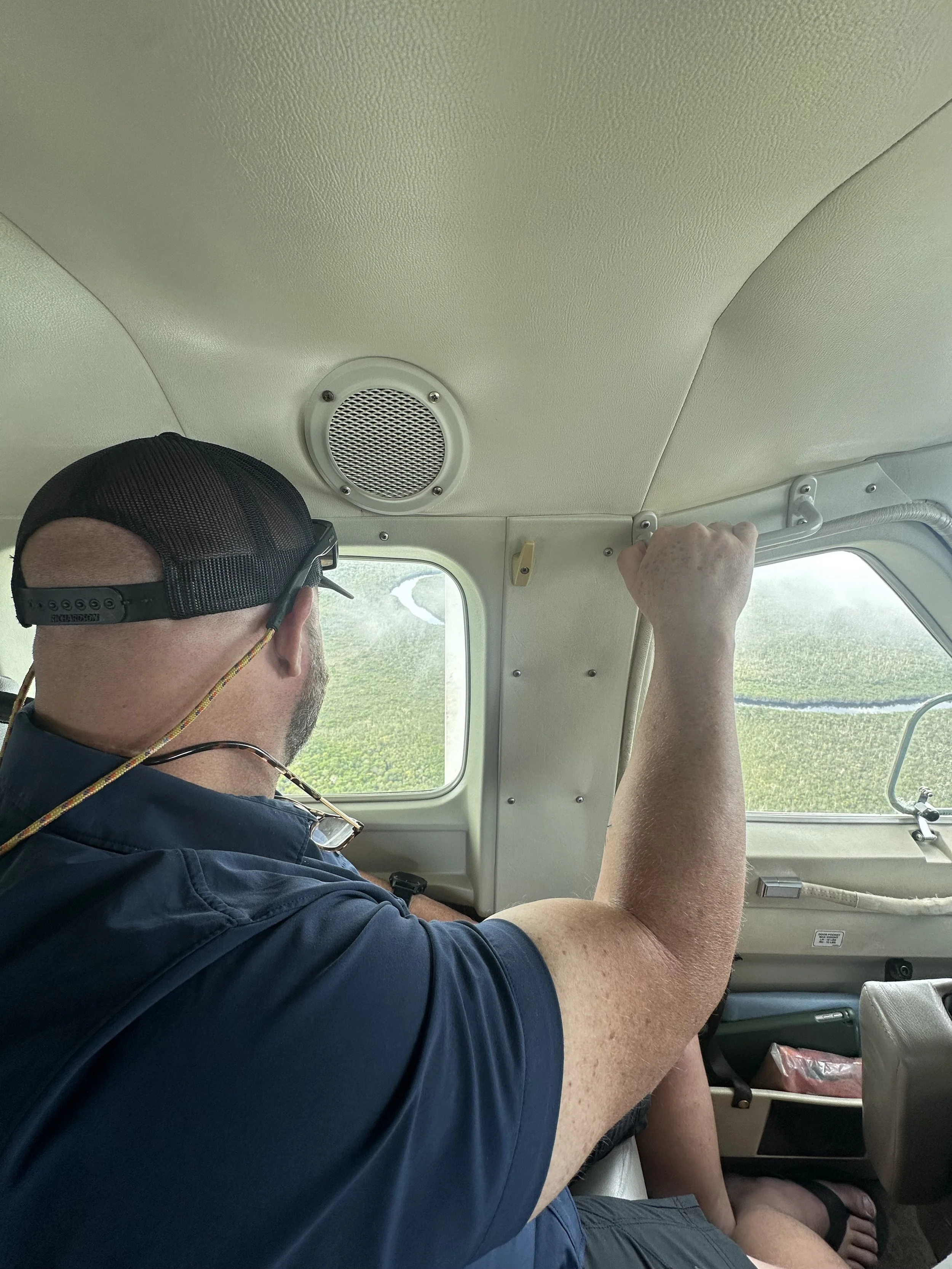
First Look at the Rio Marie “Peacock Bass Capital of the World “
The water level defined everything that followed. The program kept pushing the mothership upriver, searching for falling water, for the moment when the system would begin to make sense again. It dropped a few feet over several days, but we were fishing flood-stage conditions the entire week, something the guides said they hadn’t seen all season. The first morning on the water was a humbling reminder of how small we were in that landscape. The bays looked perfect, the jungle pressed in tight on both sides, and the river felt alive, but the fish had disappeared into the forest with the rising water. We fished hard and didn’t move one. That night we stood on the back deck of the mothership with the guides soaking baits into the darkness for giant catfish and telling stories until well past midnight, headlamps cutting narrow cones through the humidity. No one caught the monster we were hoping for, but no one wanted to go to bed either
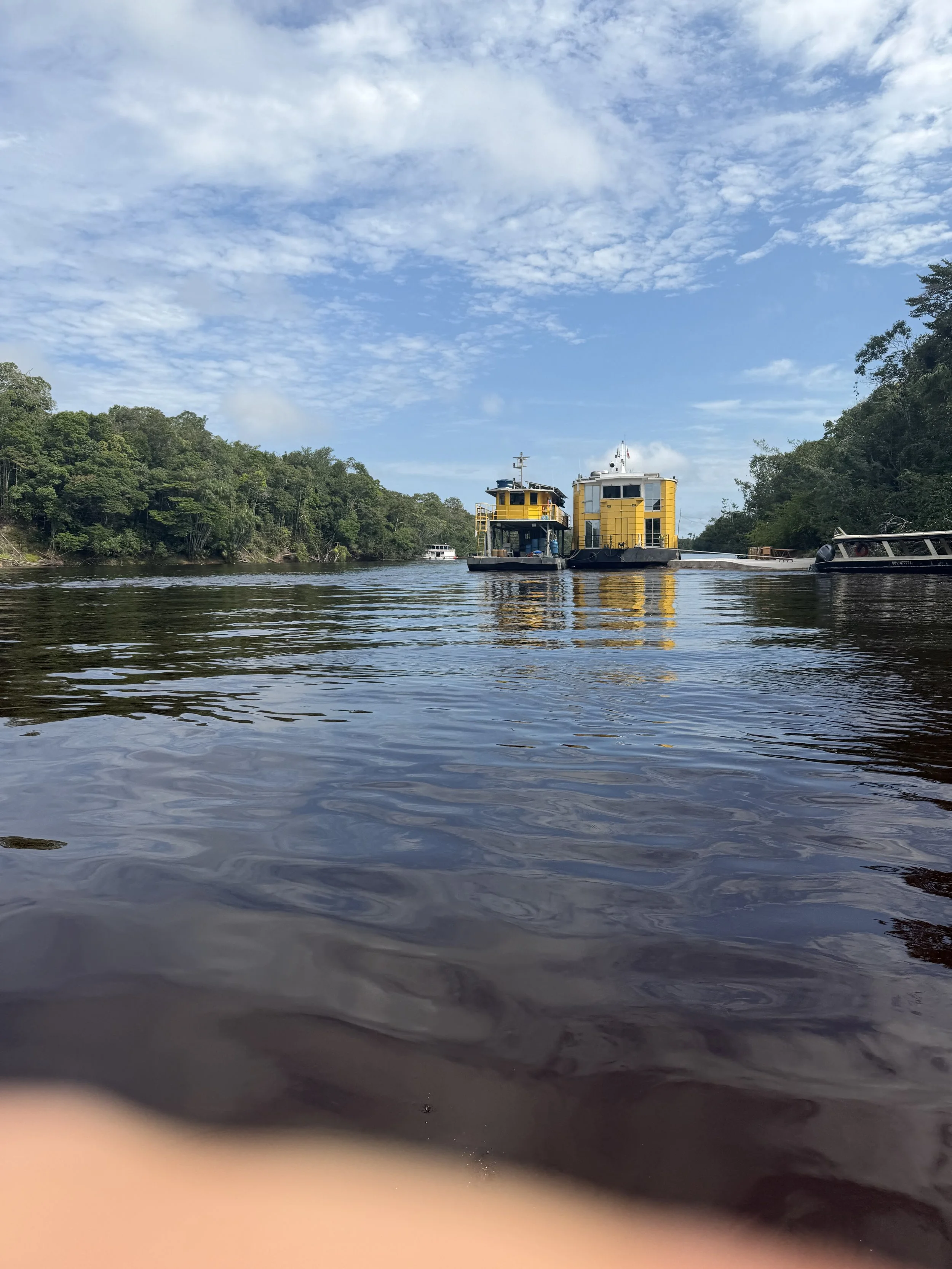
Home for the next week
The following day I was in the boat with John and Rafael, the head guide, and it was my first real exposure to LiveScope in that environment. Watching a twenty-pound peacock bass hold motionless over its bed on a screen, casting to it again and again, and seeing it follow the fly without eating was one of the strangest experiences of the trip. Everything about peacock bass in your imagination is violence — flies disappearing in explosions of water — but this was technical and subtle, a fish protecting fry, reacting rather than feeding. Rafael added a stinger hook and weight to the fly, an innovative system designed to drag through the bed and trigger a reaction. When I finally came tight on my first fish — eighty-four centimeters, twenty pounds — it was total chaos, line wrapped around the rod, hands shaking, somehow landing the fish in the middle of it all. In that moment the trip was made, and yet the feeling lingered that we had flown halfway around the world to hunt individual fish on a screen. Without the electronics we were blind-casting ten-weights into bays the size of small lakes until our hands split open; with them we were surgical. It saved the week, and I’m still not sure how I feel about that.
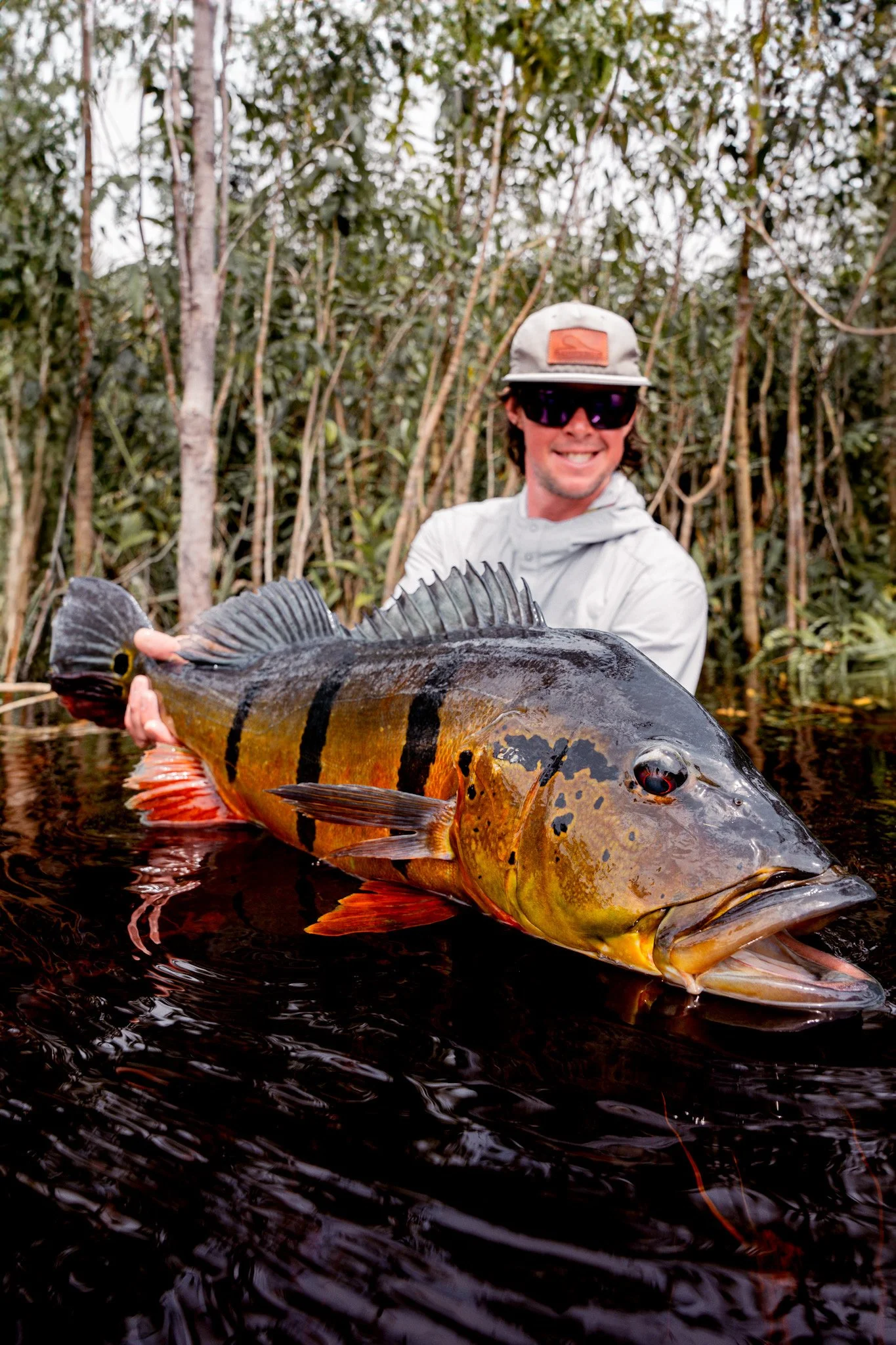
My First Peacock Bass 84cm 20lbs
By midweek I stopped worrying about efficiency and committed to fishing topwater only — giant NYAPs and tuna poppers, the kind of flies that make every cast feel like a gamble. I never moved one of the true giants on the surface, but the butterfly peacocks attacked those flies with a violence that made it impossible to stop. Somewhere else on the river Peter stuck a twenty-pounder on top in a full Amazon downpour, the largest topwater fish of the season, and when he stepped back onto the mothership that evening the look on his face said everything you need to know about why we travel for fishing.
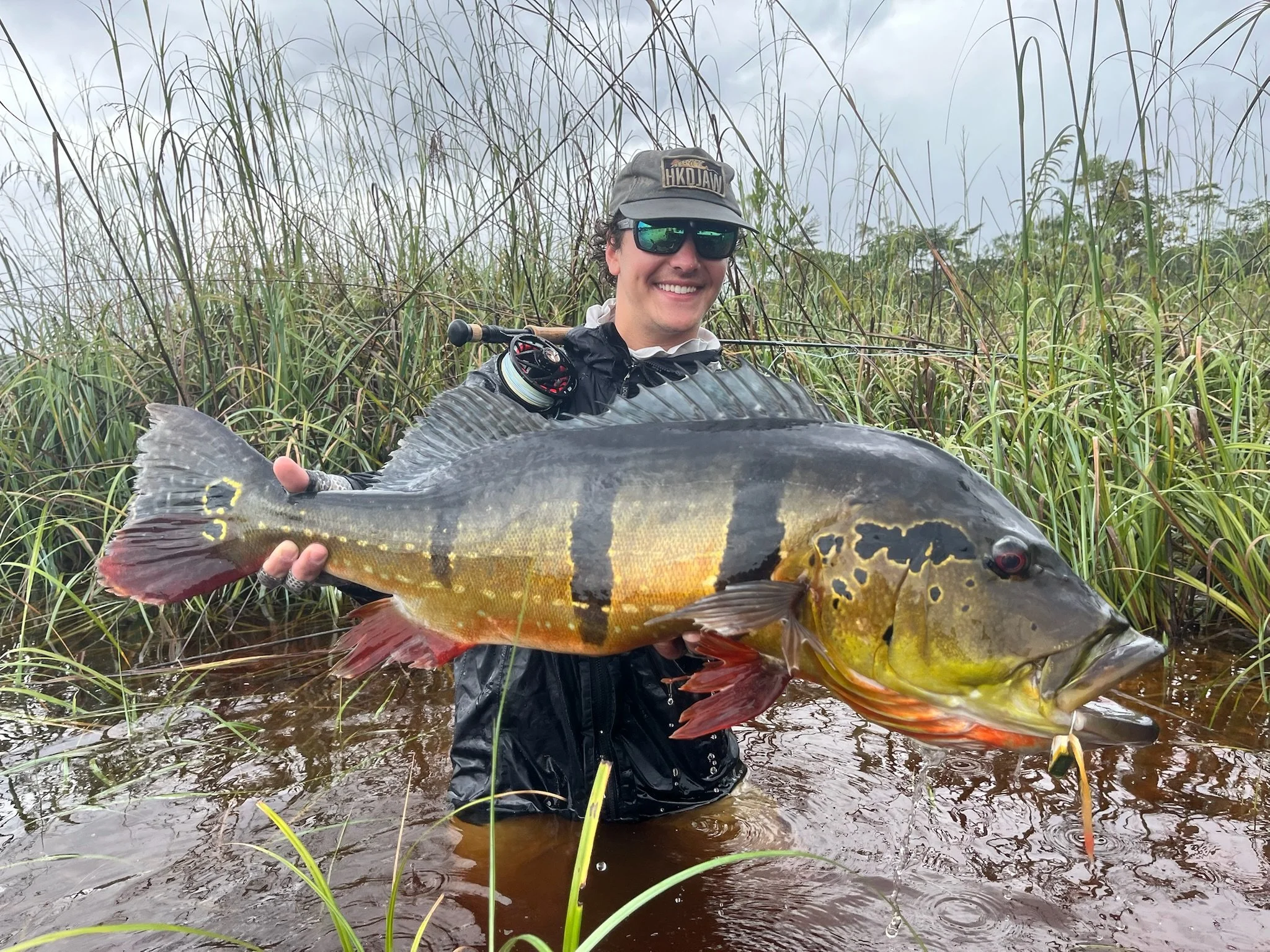
84cm 20lbs on a 5/0 NYAP Fly
Two days we fished with indigenous guides whose tribes protect the headwaters from poaching and trespass . They carried themselves with a quiet confidence that comes from knowing a river in a way you never can as a visitor. No performance, no marketing language — just an understanding of water and place that felt deeper than anything else we experienced that week. By then the physical toll of the trip had caught up to all of us. My hands were split at the fingers, there was blood ground into the cork of my rod, and every morning started with the question of whether my forearms would loosen up enough to cast. The days without LiveScope were endurance events, blind-casting into water that seemed endless, hoping to intersect a fish that might not even be there. And yet those were the days that felt the most honest.
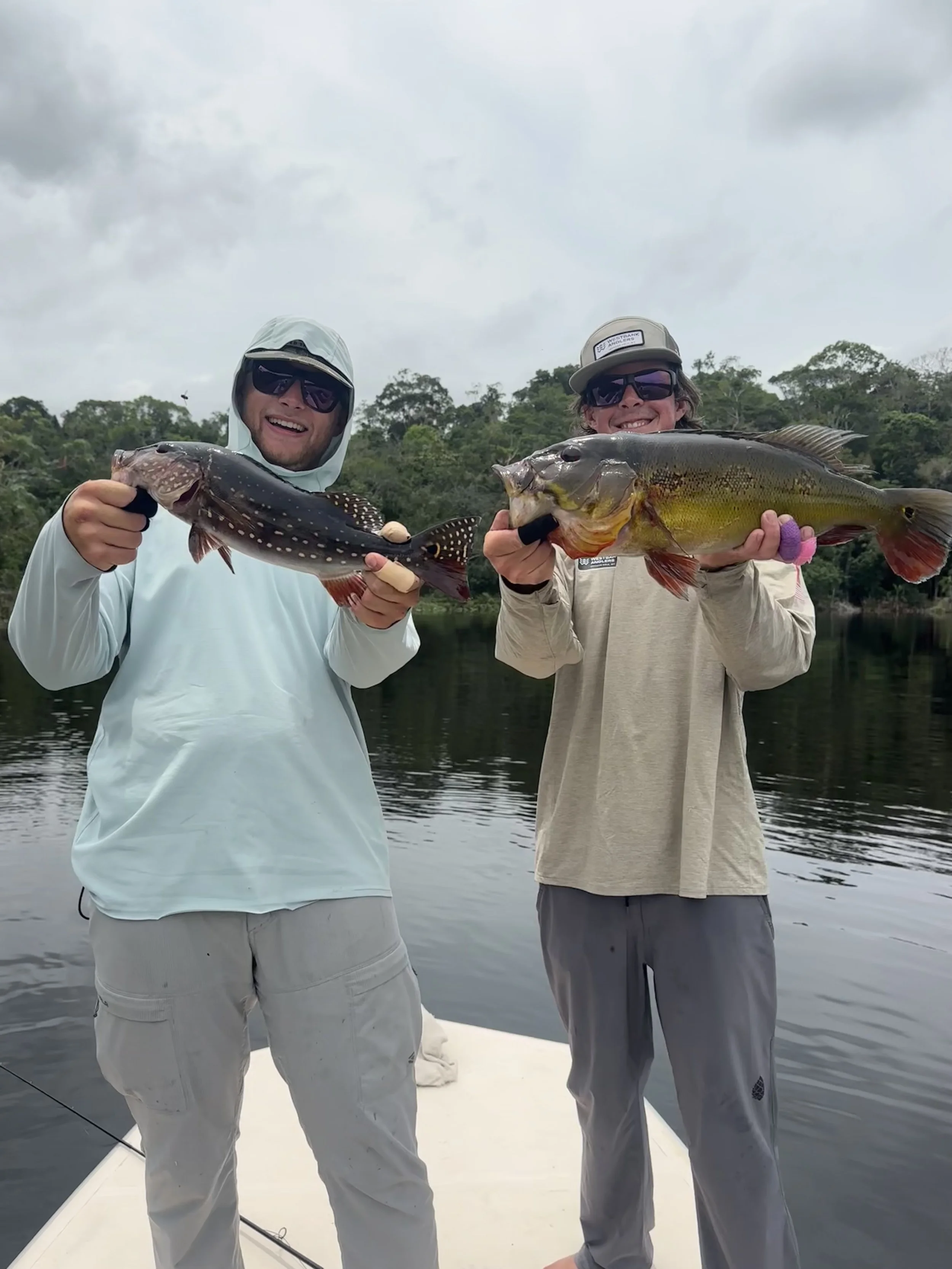
Butterfly Doubles on Topwater Patterns with Jackson Jenkins
What the mothership gives you — the food, the air conditioning, the cold drinks, the satellite Wi-Fi — creates a real sense of comfort, and it’s easy to forget just how far back you are. Five hundred miles into the Amazon wilderness, that comfort becomes a kind of illusion. We found out the week before the trip that Peter was allergic to bees, and on the first day we had swarms of massive Amazonian bees landing on our heads and hands. In that moment it hits you — an extraction from that part of the river isn’t quick. It’s eight hours or more if everything goes perfectly. It’s something anyone with medical concerns should think seriously about. The luxury is real, but so is the remoteness
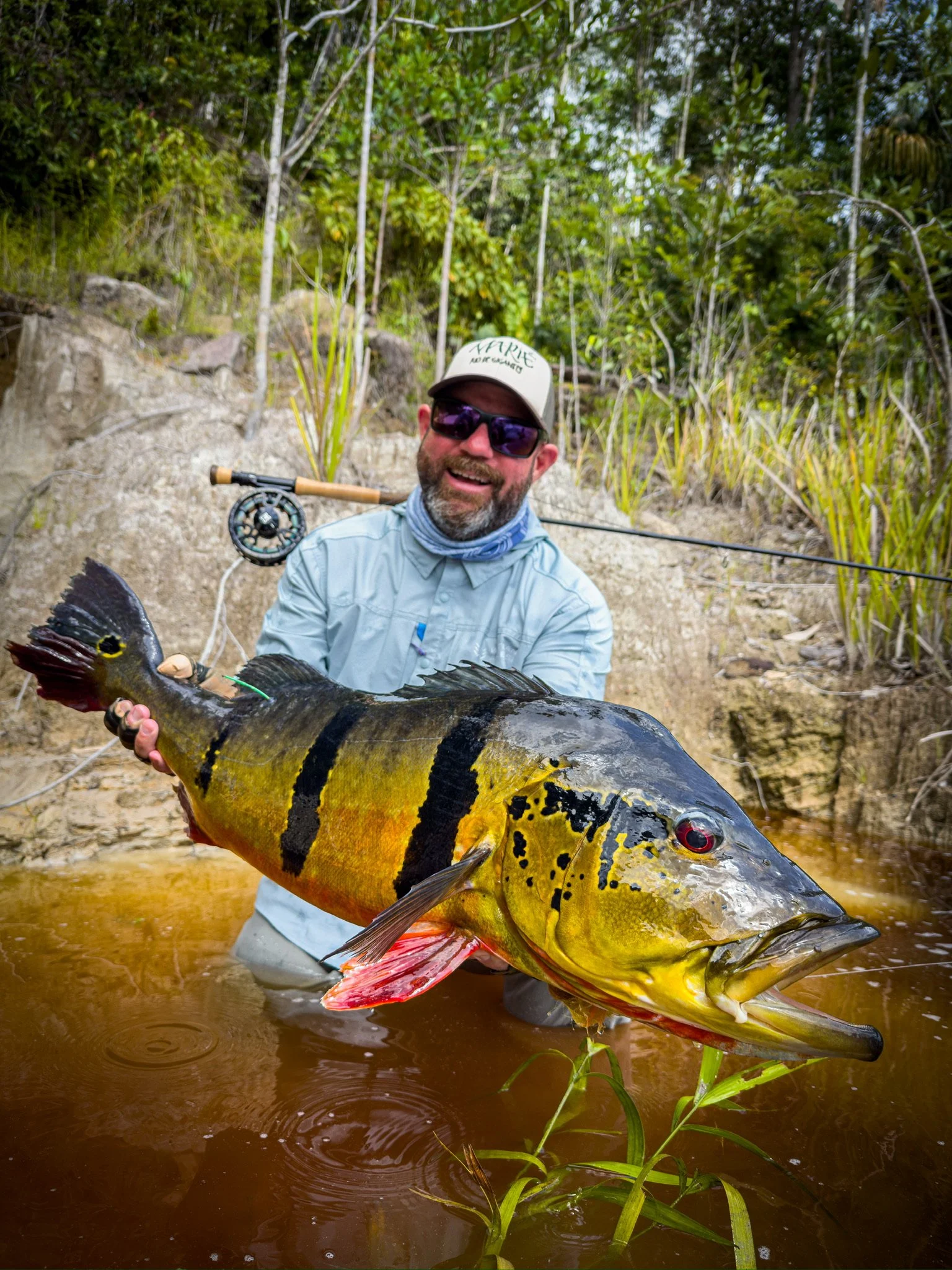
John went on a roll this day with JV landing a 18lb and 20lb peacock in the same Bay
The same kind of reality applies to tackle. The website recommends eight-weights, but once you’re there the guides consistently push nine- and ten-weights for the big fish, and after a few days it’s obvious why. When you’re throwing six- and seven-aught flies on sixty-pound fluorocarbon at fish that comfortably break twenty pounds, there’s no advantage in going lighter. Realistically you could bring a ten-weight, a handful of leaders, and nothing else. Flies follow the same logic — nothing under 4/0, and most of the time they wanted 6/0 and 7/0. Everything else stays in the box. One of the most effective systems we saw was essentially a spin-fishing adaptation — sliding lead, a stinger hook — designed specifically for bed fish. It wasn’t glamorous, but in those conditions it was the most consistent way to turn follows into hooked fish
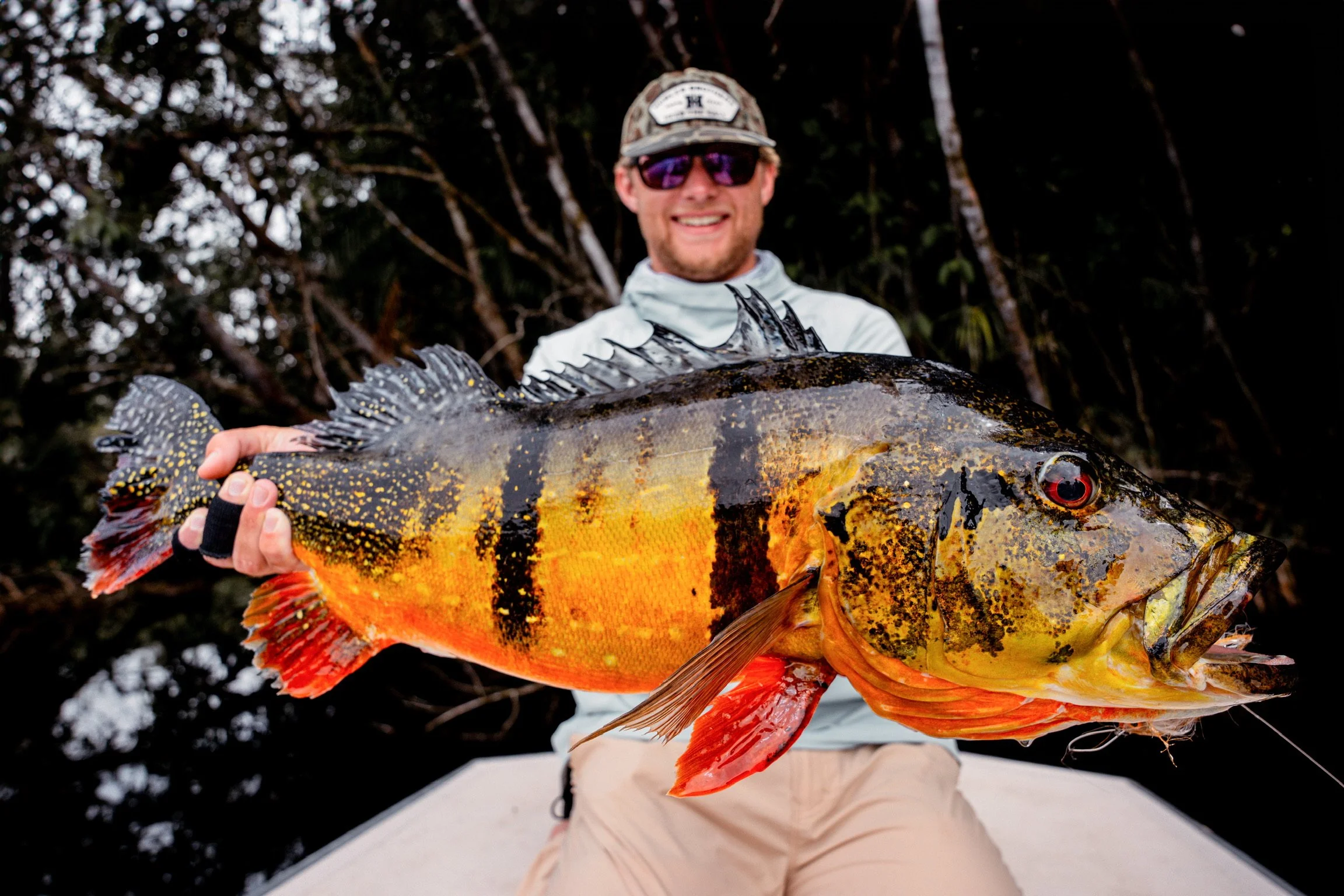
The most Unique Peacock of the week caught by Jackson Jenkins The “Rusty” bass rare spotting
The program promises new water every day, the mothership constantly moving to keep anglers on fresh fish. In fairness, we were there during extreme high water, and I’m willing to believe that under normal conditions that promise holds true. But during our week we fished the same bays repeatedly, sometimes only minutes behind another boat. It didn’t ruin the trip — far from it — but it’s part of the honest picture of what flood-stage fishing looks like in a system that size
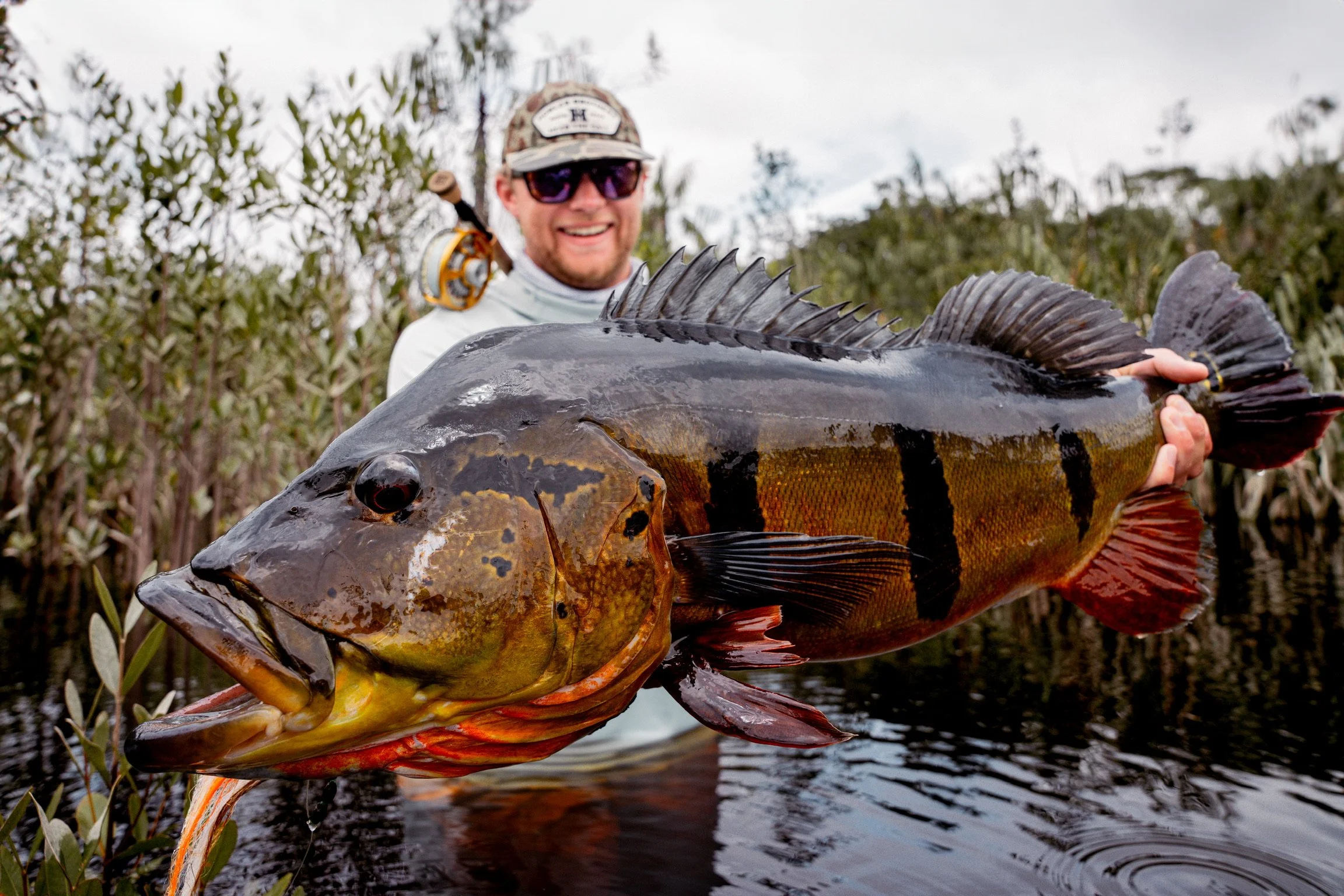
Jackson Jenkins 20lber
The final night unfolded the way the last night of a great trip always does. Photos cycling across the screen, cold drinks, stories getting better with each telling. Every one of our crew had landed a fish over twenty pounds, and when the Yeti mugs came out for the ceremony it felt like a small but meaningful trophy. We moved to the back deck, took turns with the blow darts, dropped lines into the river for one last shot at a giant catfish, and stayed up far later than we should have. No one wanted to pack their bags the next morning.
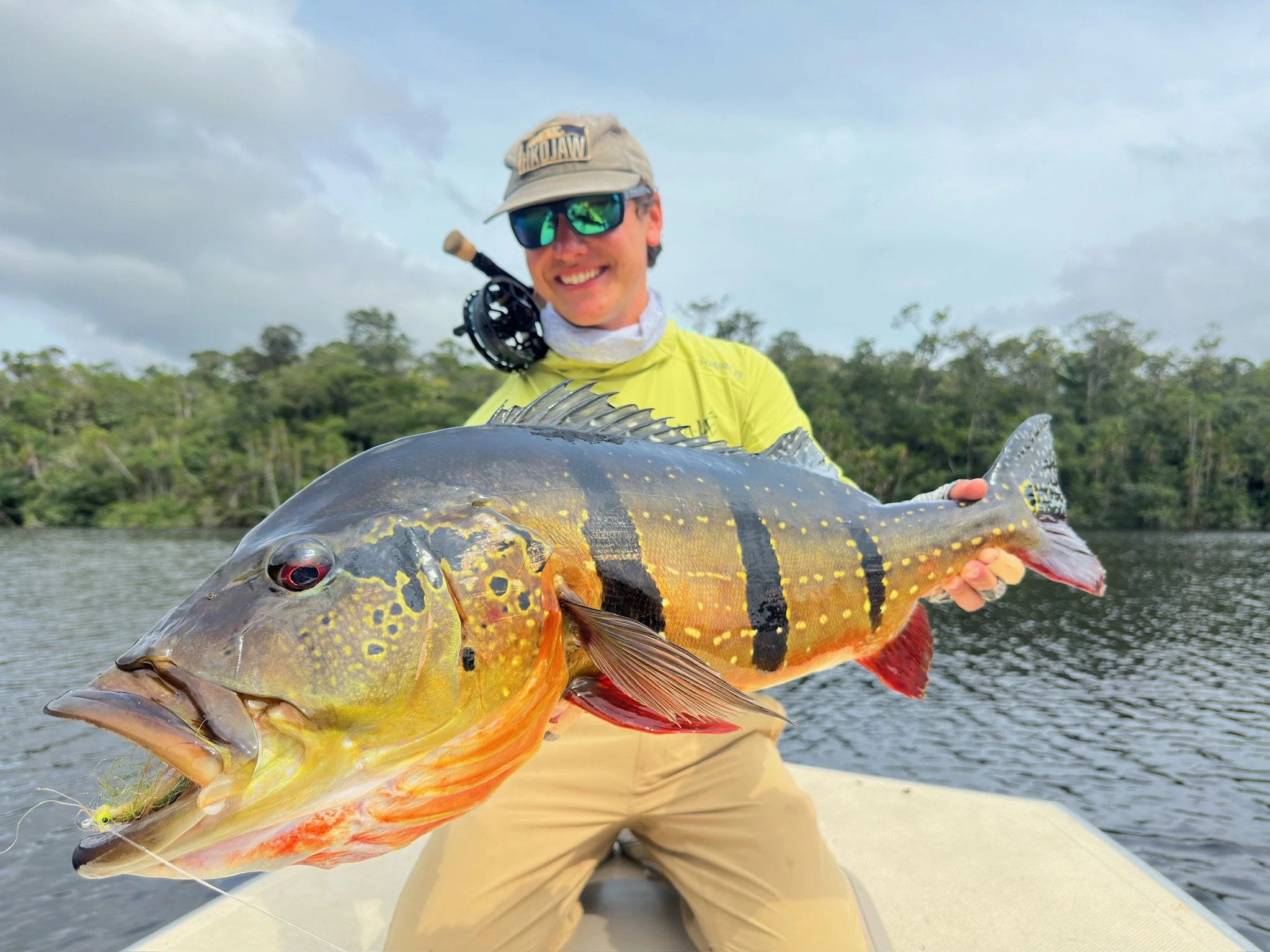
Peter Roming with a hefty 18lb peacock bass
The numbers still don’t make sense when you consider the conditions. Almost every one of the thirteen anglers landed a peacock bass over twenty pounds. Two fish broke the ninety-centimeter mark, pushing into the mid-twenties. In flood-stage water, in a system that should have been scattered and unpredictable, the Rio Marié still produced in a way that defies logic. It’s why the river has the reputation it does. It isn’t just good — it’s something else entirely.
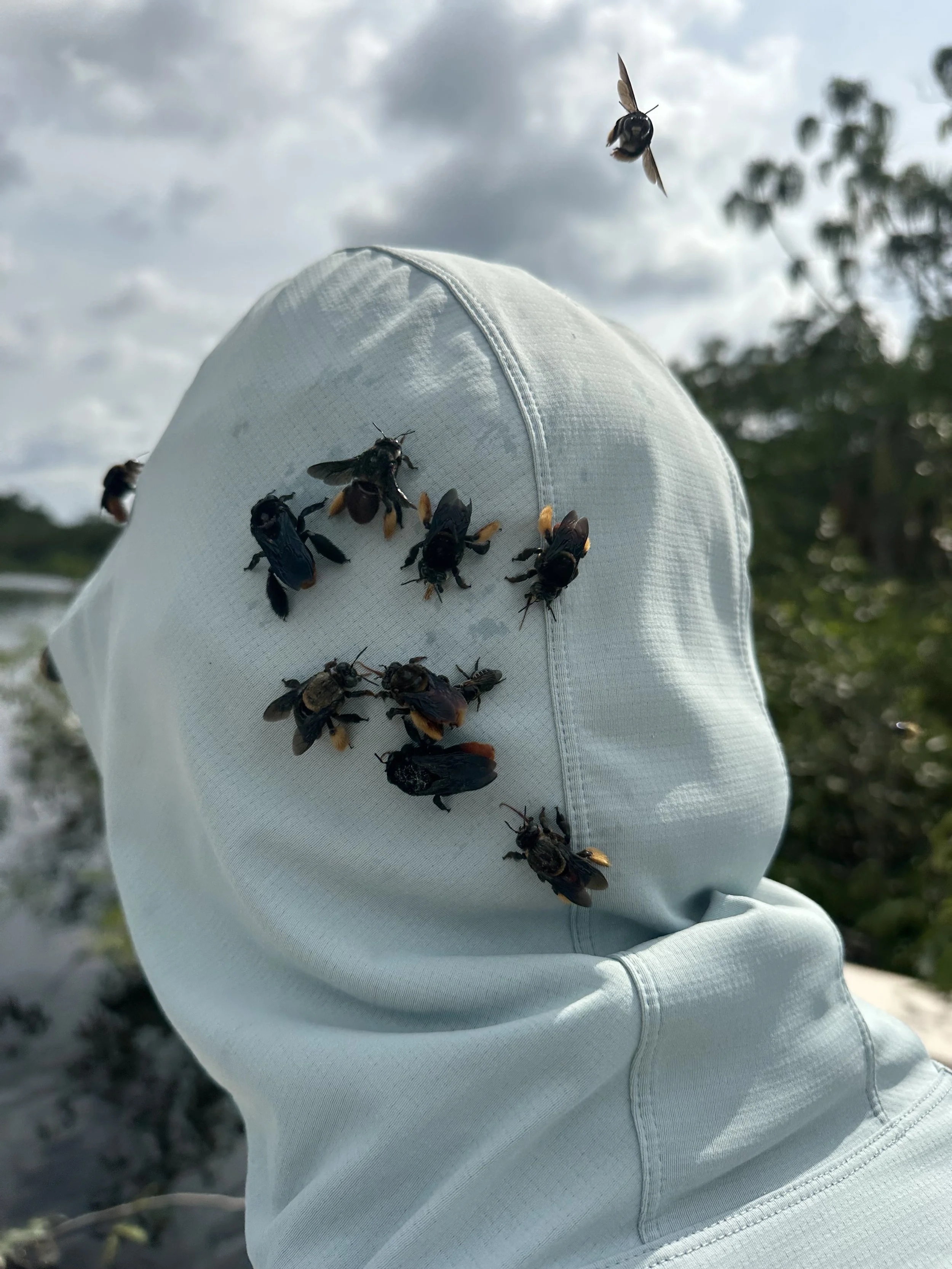
The Bees were out of control. Buzzing so loud you couldn’t hear what anyone was saying.
The travel home was flawless, and the moment I stepped through my front door in Jackson the exhaustion finally caught up to me. I dumped my gear, switched fly lines, repacked bags, and forty-eight hours later I was back on the water hosting my first trip at Kay Fly Lodge. The turnaround was tight, but I didn’t think twice about it.
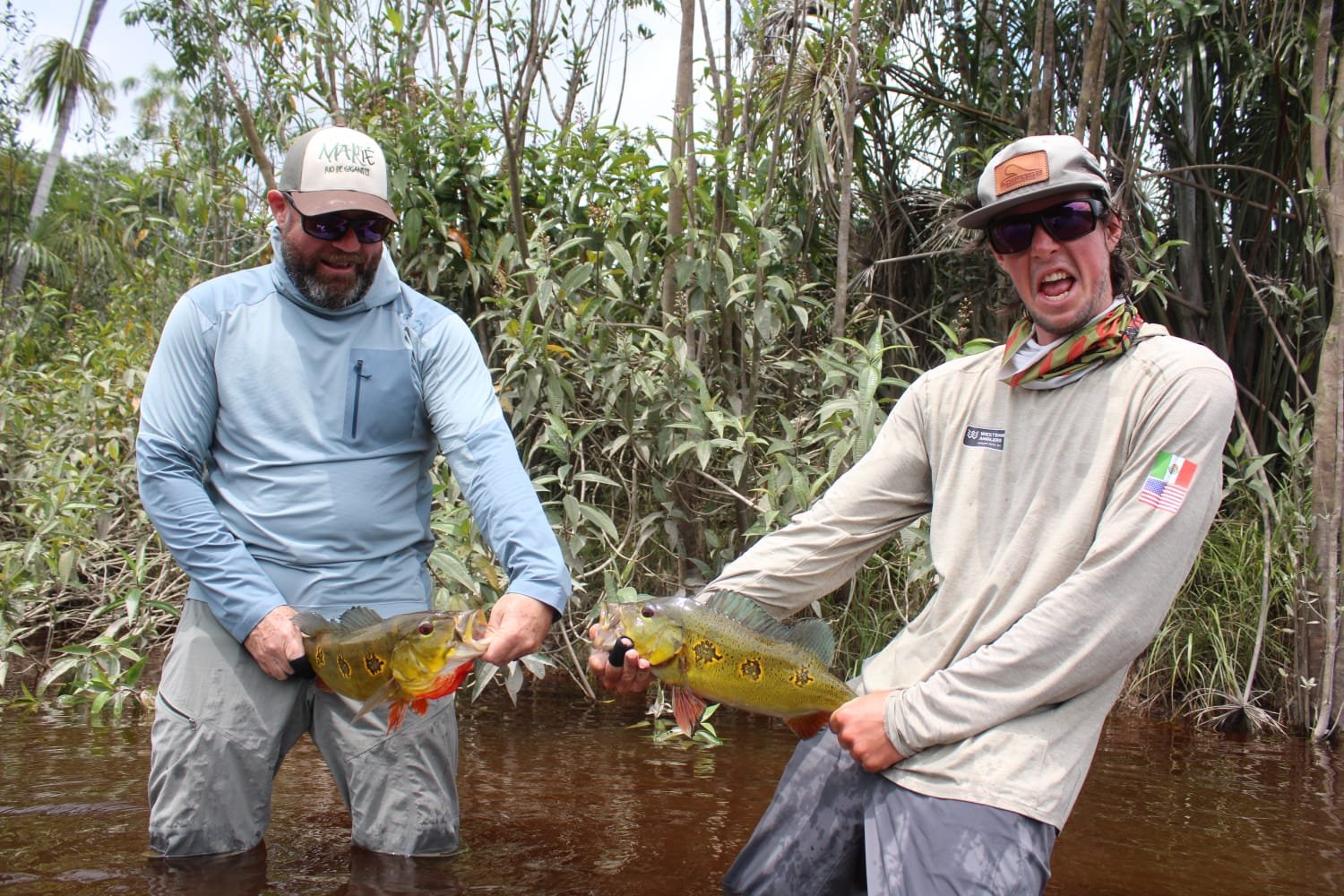
Pea Cocks get it?
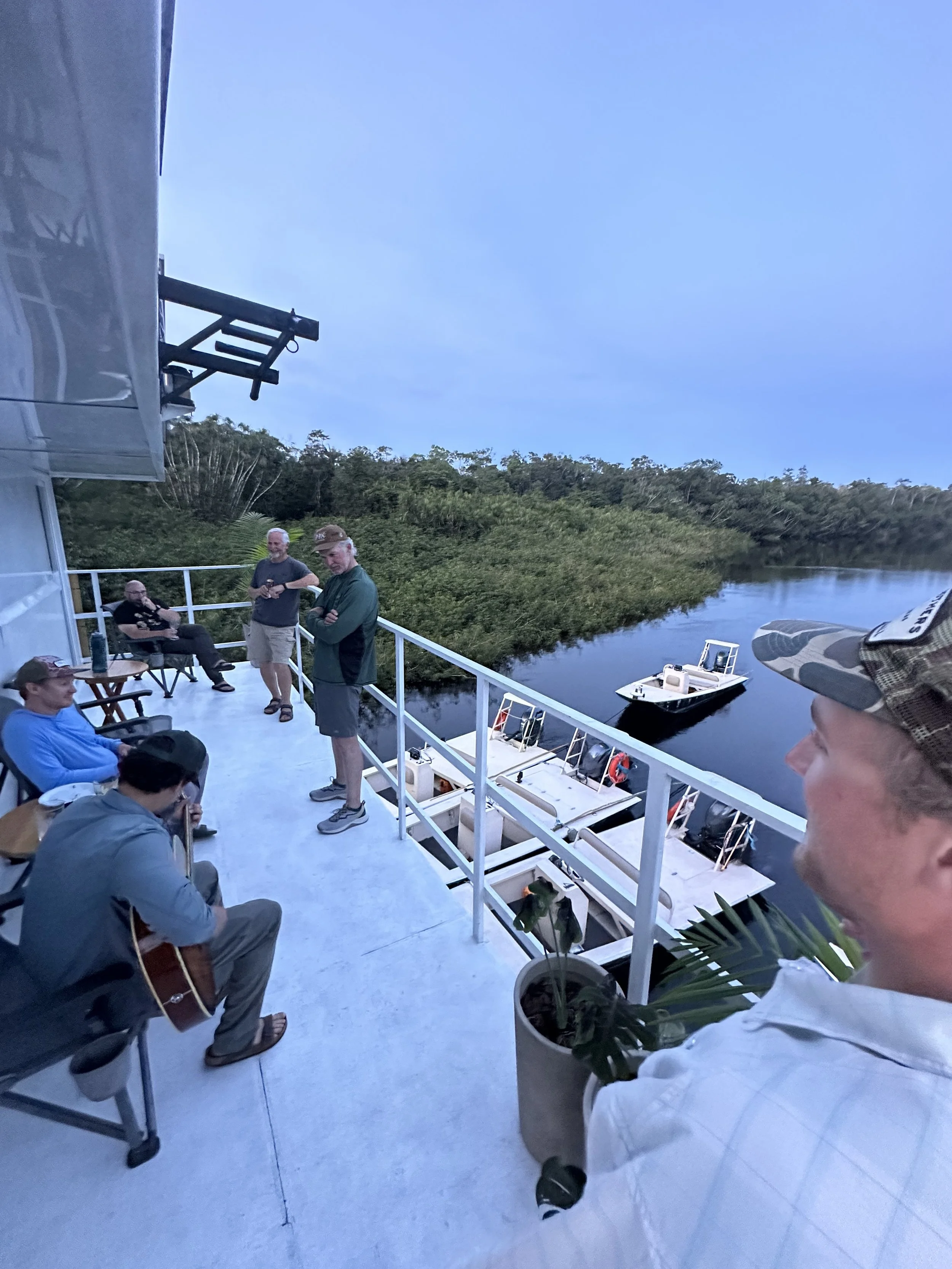
Evening spent soaking up the Amazon
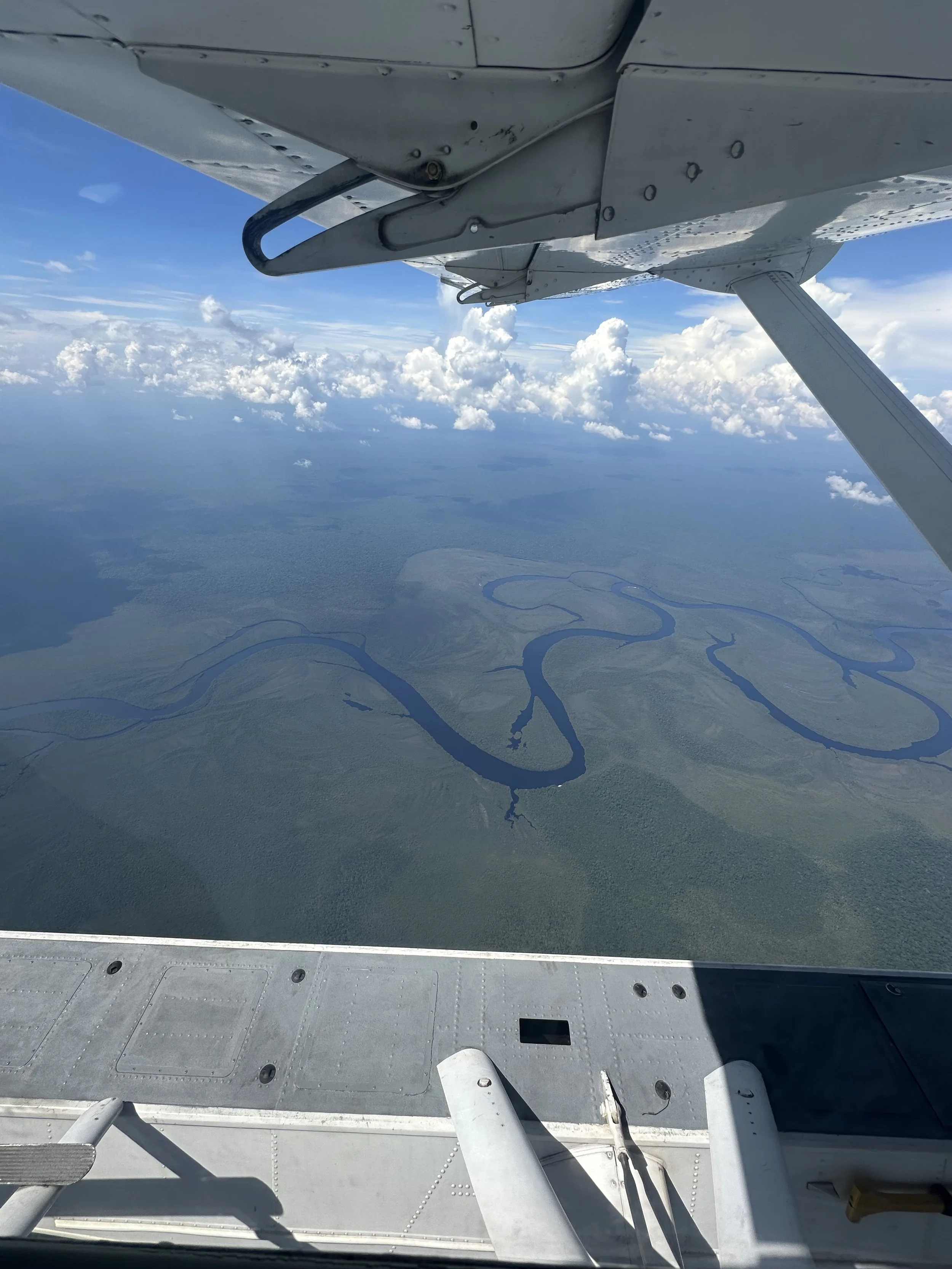
Because after a season like that, and a river like the Rio Marié, you realize it isn’t really about the tug. Everyone says the tug is the drug, but that’s not what keeps you going
Its the movement.
The new water.
The people.
The unknown.
We’re not addicted to the fish.
We’re addicted to the adventure
